

Old Masters Made New
Antwerp’s Royal Museum of Fine Art (KMSKA) uses contemporary curatorial choices in its historical galleries to invite engagement with its collection of pre-20th century art.
Hello again! I took some time off from this newsletter to birth-and-become-obsessed-with a baby(!) but am now back, and ready to pop into your inbox frequently-ish with an outsider perspective on art curation and exhibition design.
I have a confession to make. I tend to avoid fine art museums that focus on historical art because they intimidate me. Give me the Tate over the National Gallery, the Musée d’Orsay over the Louvre, and the Stedelijk over the Rijksmuseum any day. I generally find the collections at the big, old, grand museums overwhelming and inaccessible to little-old-me-without-an-art-history-degree. And their curation can feel stale, because it often is — based on original hanging arrangements from decades (or, in some cases, centuries!) ago. But a recent visit to KMSKA, the Royal Museum of Fine Arts Antwerp, has me rethinking my stance.
The museum reopened in 2022 after an 11-year renovation during which its neoclassical building was restored and transformed. Galleries featuring ‘Old Masters’ art were freshened up while maintaining their 19th century aesthetic; and a brand new unit of glossy, white-cube galleries was embedded within the building’s core, to display KSMKA’s collection of ‘Modern Masters’. Most coverage of and conversation around the museum’s renovation focuses on the new addition; I gather it was an architectural feat to create essentially a whole new state-of-the-art building inside the old original. But what has me excited is the thoroughly contemporary approach to curation in KMSKA’s historical galleries.
THE WORK
KMSKA’s collection is made up of over 8,000 works of art spanning seven centuries. Circa 600 pieces are on display at any one time and the museum has a particular focus on Flemish artists: Old Masters like Jan van Eyck and Peter Paul Rubens, as well as Modernists like James Ensor.
Art before 1880 (paintings, mostly, with some sculpture thrown in) are on show across 22 historical galleries with richly-painted walls, wood panelling, and gilded details. Unusually for this kind of art, works are arranged thematically rather than chronologically. Portraits, landscapes, and still life paintings are grouped together under the labels ‘image’, ‘horizon’ and ‘profusion’; other gallery themes include ‘evil’, ‘entertainment’, ‘heavens’, and ‘heroes’.
THE WOW FACTORS
There is a lot to look at in pre-20th century Western European art (which encompasses art history movements like Renaissance, Baroque, and Neoclassicism). Paintings were narrative and representational, showcasing scenes and stories from history, religion, and everyday life in great detail.
Though I can appreciate the beauty and technical mastery in works like these, I’ve often struggled to enjoy them, not knowing what I am looking at or what I should be focusing on. Having the paintings grouped by theme made it easier for me to parse their content, and some other clever choices by KMSKA’s curatorial team invite even closer engagement:
(1) Dialling Into Details
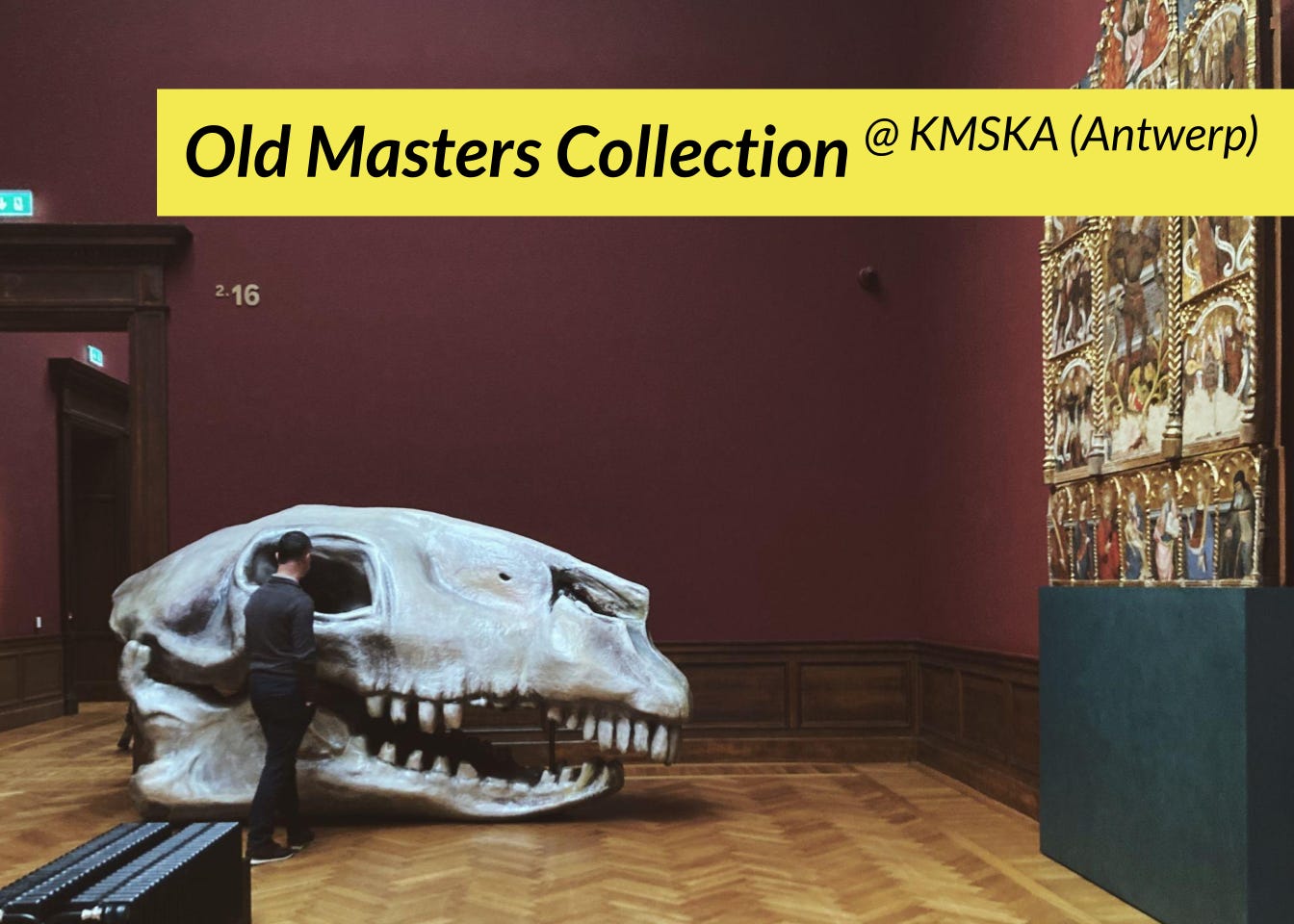
Several galleries feature massive sculptures that are impossible to miss: a huge hand hanging overhead, an oversized skull sitting on the floor, a squishy sculpture of two camels intertwined. We quickly realised that they were inspired by details from one of the paintings hanging in that room and had a lot of fun ‘hunting’ through the works in a given gallery to find the object that had been blown-up and highlighted in such a playful way. I later learned that these were part of ‘the 10’, a set of installations by artist Christophe Coppens that create a ‘family route’ throughout the museum. Though intended for children, ‘the 10’ excited me and my husband (maybe we’re just childish?!) and led me to look much more closely at many more paintings than I typically would.
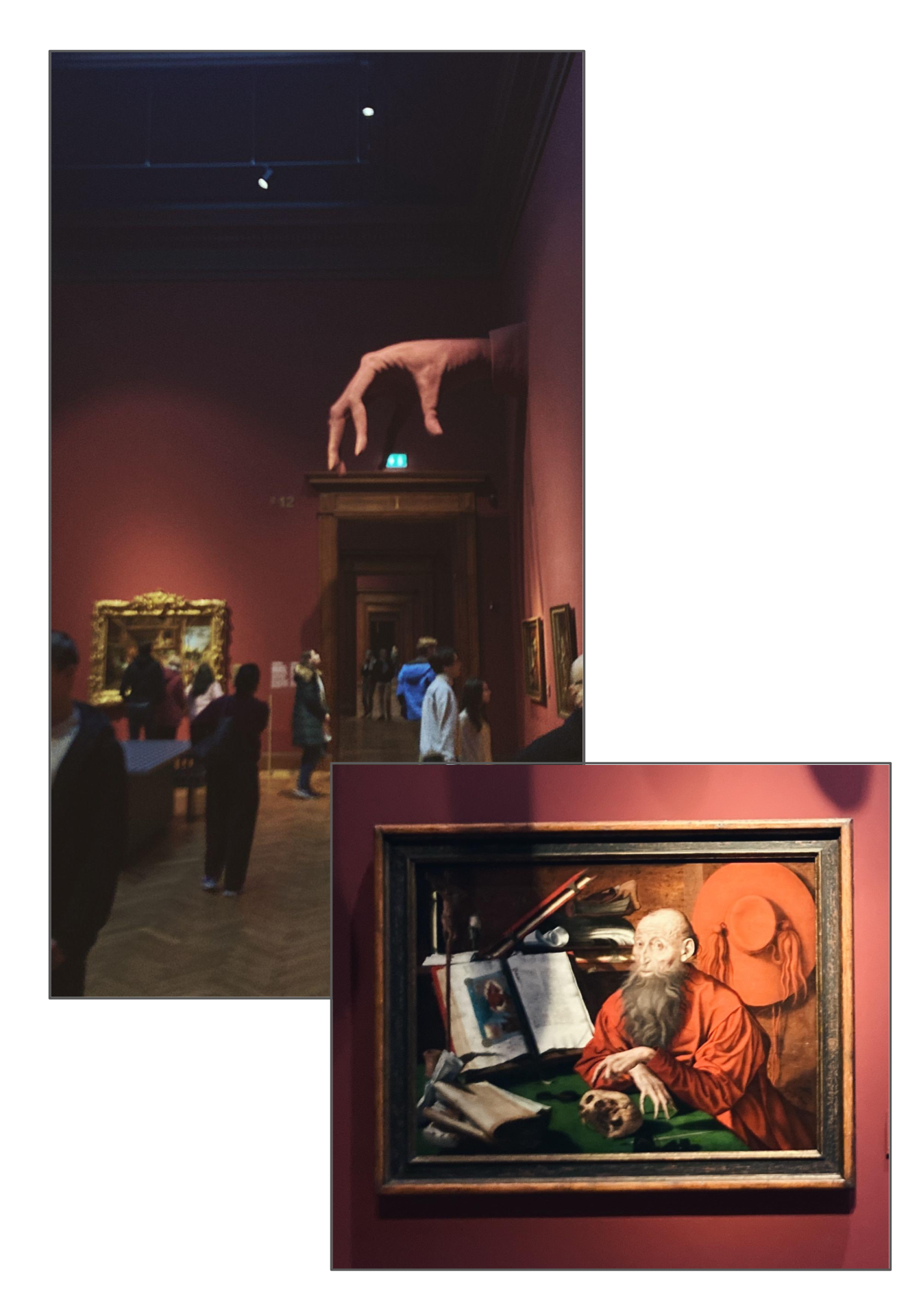
Another intervention enabling a similar effect was a video projected across four walls of one central gallery. Yes, I know that you, discerning reader, are probably turning up your nose at the thought of this immersive(!), 360(!), experience, but hear me out!
Though probably inspired by the various commercial cash-grabs that (often badly) remix famous artworks into digital animations and sell them as ‘shows’; the creators of this particular projection demonstrated great restraint. They selected just five specific details from the backgrounds of five famous artworks in the museum’s collection and subtly-animated each one in high-definition. The resulting video loop lasts just a few minutes but is mesmerising. Like ‘the 10’ sculptures mentioned above, this intervention led me to look more closely for the specific details the video projection had blown up when I eventually encountered the actual artworks in the museum.

(2) Framing Framing
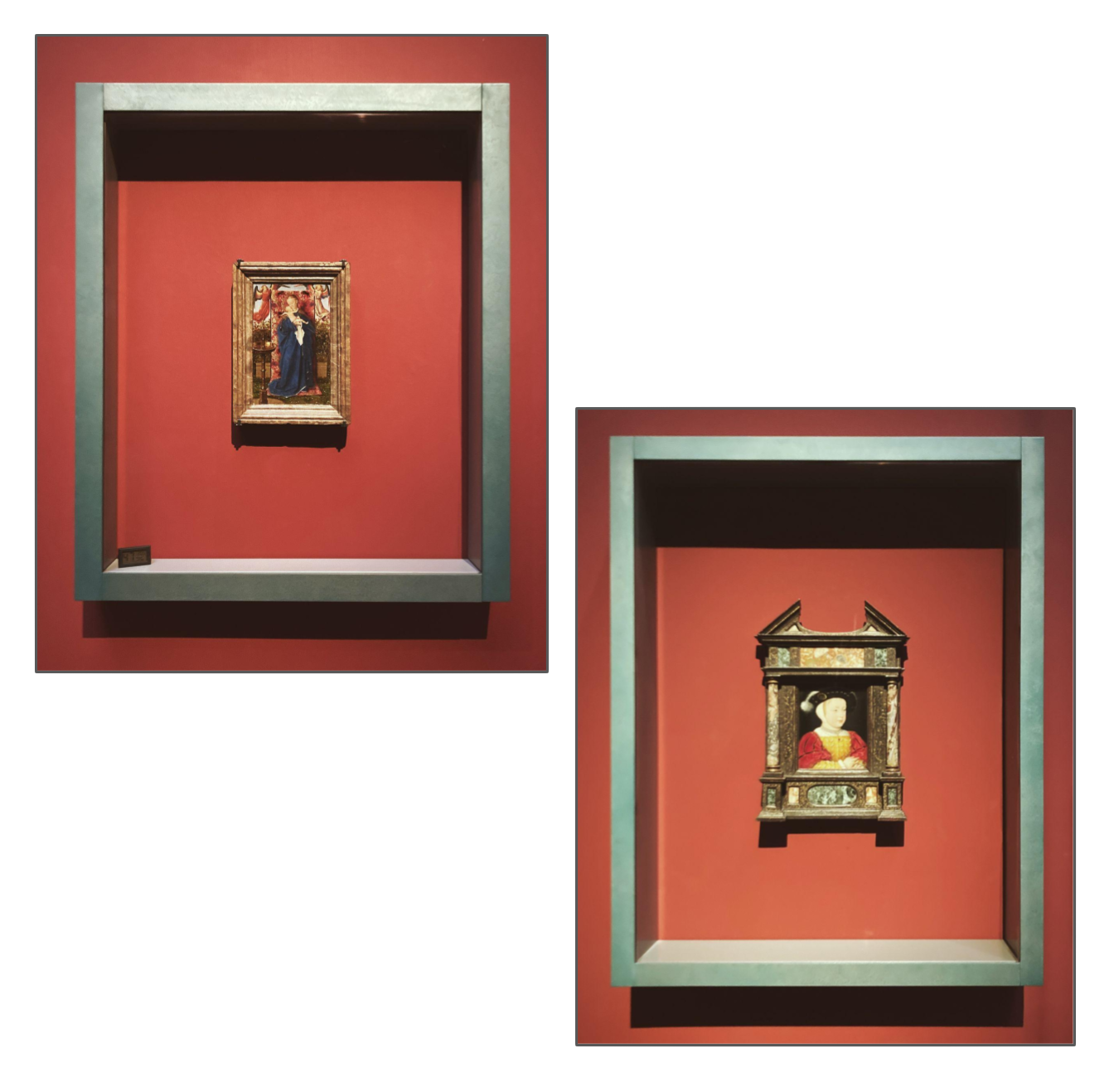
Continuing its commitment to helping visitors focus on aspects of the art they might otherwise miss, KMSKA uses a robin egg blue to frame pieces where the frame (or lack of one) is itself worth paying attention to. The bright hue and blocky borders feel a bit incongruous with the historic gallery walls and the ornate artworks on them but that feels like the point. There is no confusion between original/old frames and these new ones, which act as physical highlighter for special frames.
(3) Conversations with the Contemporary
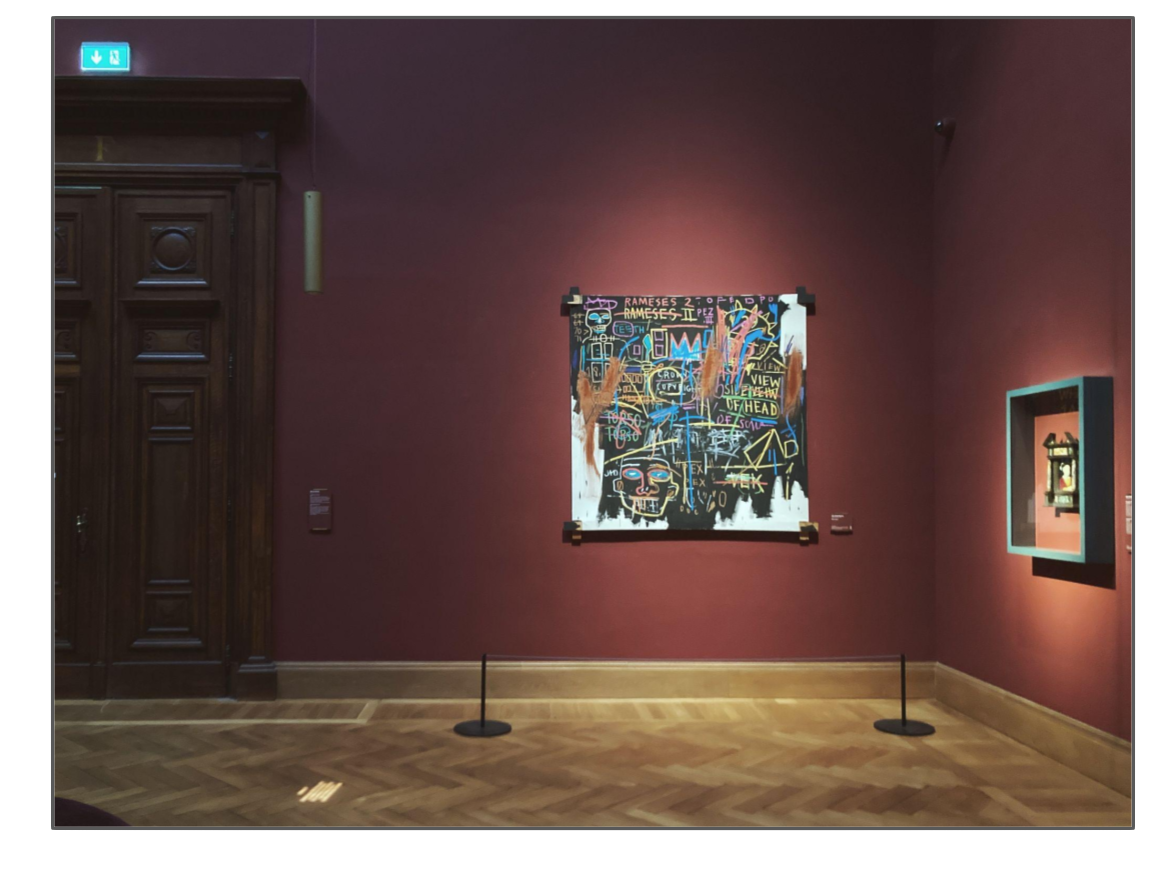
One final way the KMSKA’s curators have made their Old Masters collection more accessible to the average Joe Amirah is to punctuate its thematic galleries with an occasional contemporary piece. The connecting threads between the old and new works can sometimes feel a little superficial or on the nose but, on the whole, the attempt does support closer consideration of the content of the artworks rather than just their technical qualities. Plus, the contrasts between the old and new(er) hit home the vast difference in what art looked like then vs now.
THE WHAT DO YOU THINK?
While walking around KMSKA, I was really struck by how much fun visitors seemed to be having. The mood felt much livelier than at other fine arts museums like the Rijksmuseum in Amsterdam, where I often see tourists quietly pointing out works they ‘think are famous’. Personally, I felt like this was the first time I was walking away from a museum focused on historical European art with both an appreciation for specific works and an understanding of the context surrounding the complete collection.
Critics of KMSKA’s revamp seem to be offended specifically by the choices to make the visitor experience more accessible and playful — some of the very things I loved and have named in this piece. I’d love to know how you feel when you visit museums showcasing Old Masters. Do you think a more traditional atmosphere feels like the appropriate setting to view works like these, or do any of these curatorial choices sound like they might enrich your experience? Let me know with a comment below (if you’re reading this online or in the Substack app), or with a reply to this email (if you’re reading in your inbox).
Now I want to visit it!! 😮💨